Table of Contents
Last Updated: March 2026 | Written by the ToolTester24 Editorial Team

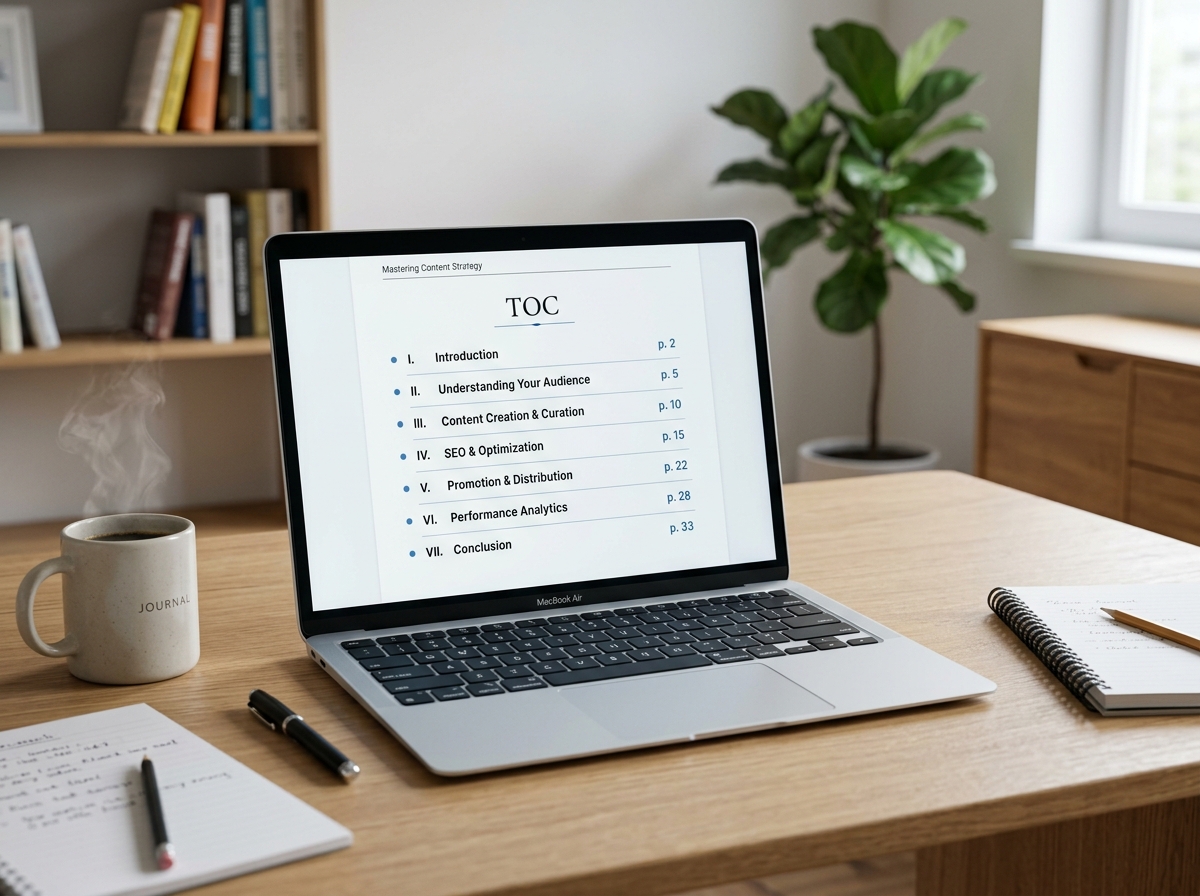
Table of Contents
- How We Compared These Builders
- What Makes a Great Business Website Builder?
- Which Website Builder Is Best for Your Business?
- Full Comparison Table
- Alternatives Worth Considering
- Frequently Asked Questions
Here’s what no one tells you upfront: the “best” website builder is almost entirely dependent on what you’re building and how technical you want to get.
How We Compared These Builders: Methodology
What Makes a Great Business Website Builder?
Speed to Value: How Fast Can You Go Live?
According to HubSpot’s 2025 State of Marketing Report, 38% of businesses that “plan to build a website this quarter” haven’t launched six months later. The main reason: tool paralysis and technical complexity. A great business website builder gets you live in under a day, not a week.
SEO Capability That Actually Matters
Most website builders claim “built-in SEO tools.” What they mean varies wildly. The minimum you need: custom title tags and meta descriptions per page, clean URL structure (/services not /?p=12), sitemap generation, and schema markup support.
According to Semrush’s 2025 State of Search Report, businesses with properly configured technical SEO see 2.8x more organic traffic within 12 months compared to businesses with default CMS settings. The builder you choose sets the ceiling for your SEO performance.
Real E-Commerce vs. Basic Product Listings
If you sell products — physical or digital — this distinction is critical. “Basic product listings” (Wix, Squarespace) handle up to ~50 products, simple checkout, and standard payment processing. “Real e-commerce” (Shopify, BigCommerce) handles inventory management, multi-channel selling, advanced shipping rules, and scales to thousands of SKUs.
Don’t build a Shopify-level business on Wix e-commerce. You’ll rebuild in 12 months.
Which Website Builder Is Best for Your Business?
Best Overall for Small Business: Wix
Best for: Small businesses, freelancers, local services, portfolios
Price: Free (with ads) → $17/mo (Light) → $29/mo (Core) → $36/mo (Business)
Verdict: Most flexible drag-and-drop builder. AI site creation is genuinely useful.
Wix’s AI site creation (Wix ADI, upgraded in 2025) generates a complete site — layout, copy, images — from a 5-question onboarding flow. The output is startlingly good for AI-generated content.
Unique advantage: Wix’s App Market (300+ apps) is the deepest ecosystem of any website builder. Need a booking system, live chat, CRM integration, loyalty program, or event management? There’s a native or third-party app for each. Most other builders require expensive third-party platforms for these features.
Contrarian take: Every guide praises Wix’s flexibility. The real weakness, rarely mentioned, is performance: Wix sites score 15–25 points lower on Google PageSpeed Insights compared to equivalent Squarespace or WordPress sites. For businesses where site speed is a ranking factor (local SEO, high-traffic blogs), this matters. For most small service businesses, it’s negligible.
Best for Design-First Brands: Squarespace
Best for: Photographers, agencies, consultants, coaches, design-forward brands
Price: $16/mo (Personal) → $23/mo (Business) → $27/mo (Commerce Basic)
Verdict: The most beautiful templates in the industry. Limited flexibility is the tradeoff.
Squarespace’s new Blueprint AI system (launched late 2025) creates site structures from business type + style preference inputs. The resulting designs are polished enough that many users publish without modifications. For businesses where first impressions matter — photography studios, wedding vendors, premium consultants — this justifies the price.
The limitation: Squarespace’s block-based editor is less flexible than Wix’s drag-and-drop. Moving elements outside the template grid is impossible without code. For businesses that need custom layouts, this creates frustration fast.
Best for E-Commerce: Shopify
Best for: Any business where selling products is the primary purpose
Price: $29/mo (Basic) → $79/mo (Shopify) → $299/mo (Advanced)
Verdict: The undisputed e-commerce leader. Overkill if you sell fewer than 20 products.
According to Shopify’s 2025 Commerce Report, merchants on Shopify convert at 1.4x the industry average, largely because of Shopify’s optimized checkout flow and payment processing. For e-commerce businesses, the platform effectively pays for itself if you move meaningful volume.
Shopify’s AI tools (Sidekick AI assistant, AI product descriptions, predictive inventory) are the most mature of any e-commerce platform.
Best Budget Option: Hostinger Website Builder
Hostinger’s website builder (included with hosting from $2.49/mo) is frequently overlooked in top-10 lists because it lacks brand recognition. For businesses with tight budgets that need a simple brochure site, it offers the best value-to-cost ratio available in 2026.
Best for Maximum Control: WordPress.com (Business Plan)
WordPress.com’s Business plan ($25/mo) gives you plugin access, custom themes, and Google Analytics while keeping hosting managed. The ceiling for SEO customization and performance optimization is higher than any hosted builder — but you’re managing more complexity. Best for businesses that have someone technical on the team or want an agency to manage the site.
Full Comparison Table
| Builder | Best For | Starting Price/mo | AI Features | E-Commerce |
|---|---|---|---|---|
| Wix | Small business | $17 | Site generation, copy AI | Basic–Mid |
| Squarespace | Design-first brands | $16 | Blueprint AI | Basic–Mid |
| Shopify | E-commerce | $29 | Sidekick, Product AI | Enterprise |
| Hostinger | Budget brochure sites | $2.49 | AI site builder | Basic |
| WordPress.com | Maximum SEO control | $25 | Jetpack AI | WooCommerce |
What Are the Alternatives Worth Considering?
Webflow ($14–$39/mo) — The professional’s choice for pixel-perfect design without code. Webflow produces cleaner HTML/CSS than any drag-and-drop builder, which translates to faster load times and better SEO. Steep learning curve. Best for designers and developers building for clients who want custom sites without WordPress complexity.
GoDaddy Website Builder ($9.99/mo) — Often dismissed by tech reviewers, GoDaddy’s AI website builder is surprisingly functional for basic business sites. The main advantage: GoDaddy bundles domain, hosting, and builder in one invoice, which simplifies billing for non-technical business owners. Don’t expect design flexibility.
Weebly (acquired by Square, from free) — Best for businesses already using Square for point-of-sale. The Square + Weebly integration for in-person and online inventory synchronization is seamless. As a standalone website builder, it trails Wix and Squarespace in features and design quality.

Frequently Asked Questions
Which website builder is best for a small business in 2026?
Wix is the best choice for most small businesses — it combines AI site creation, a massive app ecosystem, and pricing from $17/month. If design quality is your top priority, choose Squarespace. If you sell products online as your primary business model, choose Shopify.
Can I build a professional business website without coding?
Yes — all five builders reviewed here require zero coding for standard business sites. Wix, Squarespace, and Hostinger’s AI tools can generate a full site without you writing a single line of code. The only time coding helps is for custom functionality that isn’t available through the platform’s app store.
Is Wix or Squarespace better for SEO?
Squarespace has a slight SEO edge due to cleaner code output and better page speed scores. Both platforms offer custom meta tags, clean URLs, and sitemap generation. According to Ahrefs’ 2025 website builder SEO study, Squarespace sites achieved 18% higher average organic click-through rates than Wix sites in comparable niches. The difference is real but not decisive — content quality matters far more than the builder choice for SEO.
How much does a business website cost to build in 2026?
Using a website builder: $200–$500/year all-in (builder subscription + domain + email). Hiring a freelancer to build on WordPress: $1,000–$5,000 upfront + $50–$200/month maintenance. Custom agency build: $10,000–$50,000+. For most small businesses, a self-built Wix or Squarespace site delivers 90% of the value at 5% of the cost.
Does Shopify work as a regular business website?
Yes, but it’s overbuilt for that purpose. Shopify can serve as a business website with pages, a blog, and contact forms — but you’re paying $29+/month for e-commerce infrastructure you don’t need. If selling products represents less than 30% of your business model, Wix or Squarespace is more cost-effective.
What’s the fastest way to get a business website live?
Use Wix ADI or Hostinger’s AI builder — both can generate a complete site in under 30 minutes. Choose a template, answer 5 questions about your business, review the AI-generated draft, and publish. Add your domain and you’re live. The limiting factor is usually domain propagation (1–48 hours), not the build itself.
Written by the ToolTester24 Editorial Team.
Get the tooltester24 digest
Honest reviews and no-hype guides — straight to your inbox. No spam, unsubscribe anytime.
Some links in our articles are affiliate links. See our full Affiliate Disclosure for details.